
Newsletter Subscribe
Enter your email address below and subscribe to our newsletter


 ByJohn A
Artificial intelligence reshapes animation and design by accelerating workflows and enabling rapid iteration. Generative tools offer consistent style, lighting, and motion options, reducing manual frame-by-frame effort. Governance evolves toward transparent decision-making and accountable provenance, with clear attribution and ownership. A practical studio approach emphasizes lean pilots, versioned pipelines, and secure access, while continuously evaluating tools. The balance between creativity and responsible governance invites careful consideration of processes, incentives, and risks, inviting further examination of how teams adapt to these pressures.
AI accelerates animation and design workflows by automating repetitive tasks, enabling rapid iterations, and enhancing consistency across projects.
The approach emphasizes AI governance, ensuring transparent decisions and accountability.
Data provenance traces origins of inputs and outputs, supporting auditability.
Bias mitigation safeguards fairness in results, while preserving creative autonomy, allowing artists to steer processes without sacrificing efficiency or reproducibility.
For motion realism, algorithms calibrate timing, easing, and micro-dynamics, delivering believable movement without manual frame-by-frame intervention, supporting rapid experimentation and consistent world-building.
The rapid integration of AI-driven creativity into animation and design raises complex questions about ethics, intellectual property, and collaborative processes.
This analysis frames governance as essential, not punitive, focusing on transparent value creation and reproducible outcomes.
It examines ethics enforcement pragmatically, clarifying roles in attribution, accountability, and consent, while delineating IP ownership in shared and derivative works within evolving creative ecosystems.
What concrete steps can a studio take to deploy AI tools effectively today, balancing speed with governance and quality? Establish a lean pilot program, define measurable outcomes, and implement rapid feedback loops. Codify workflow governance, standardize model selection, and document data provenance. Invest in versioned pipelines, secure access, and continuous training. Align tools with creative freedom while preserving accountability and scalable, responsible innovation.
AI will gradually reallocate roles in animation studios, enhancing efficiency and enabling new specialties. It supports AI workflow integration and creative collaboration, shifting focus to higher-level storytelling, supervision, and creative problem-solving while preserving human oversight and artistic autonomy.
AI cannot fully replace human creativity in design processes, but AI ethics and creative collaboration will shape outcomes, augmenting insight while preserving autonomy; the focus shifts to leveraging machines as partners that expand creative freedom and decision-making.
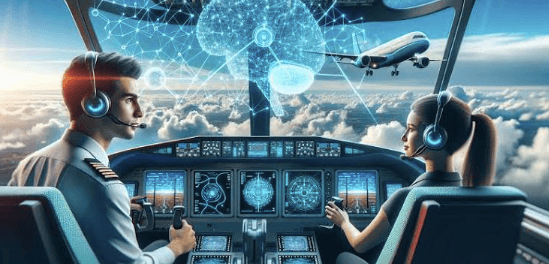
See also: Artificial Intelligence in Airline Operations
Licensing pitfalls surround AI generated assets as authorship, rights ownership, and derivative works blur boundaries; contractual clarity is essential. Analysts advise rigorous attribution, transparent training provenance, and explicit license terms to preserve freedom while mitigating legal and ethical risks.
Originality is preserved through rigorous originality checks and deliberate Artist collaboration, where human decision-making guides AI outputs, iterating concepts and injecting unique perspectives. The approach emphasizes transparent workflows, critical evaluation, and continual refinement to sustain inventive autonomy.
ROI expectations vary; studios should anticipate measurable gains from ROI focused AI training for studio leadership, aligned with pipeline efficiency metrics, time-to-delivery reductions, and quality consistency, while maintaining creative freedom and strategic prioritization across departments.
In a corridor of glass and circuits, AI serves as a compass and metronome. It marks time with efficiency, yet leaves room for human intent to steer the course. Each iteration is a lantern on a dark draft, revealing possibilities while exposing boundaries—ethics, consent, provenance—like whispered signatures on a shared canvas. The studio’s spine strengthens as pilots, pipelines, and governance align, guiding a future where creativity flows with accountability and measurable, humane progress.



[…] See also: Artificial Intelligence in Animation and Design […]